Prancing Pony Farm Maremma Sheepdogs and Mini Dairy Goats
  • Home
    • Our Story
    • Contact us
    • Veterinarian's Letter of Recommendation
    • Sales Policies
  • Mini Nubian & Nigerian Dwarf Goats for Sale
    • Why Choose Us?
    • Our Goat Reservation Process
    • Adult Goats for Sale
    • Kids for Sale
    • Our Dairy Goat Herd
      • Mini Nubian Does
      • Mini Nubian Bucks
      • Standard Nubian Does
      • Nigerian Dwarf Does
      • Nigerian Dwarf Bucks
      • Current & Past Kidding Seasons
        • 2025 Mini Nubian Kids
        • 2025 Nigerian Dwarf Kids
        • 2024 Kidding Season
        • 2023 Mini Nubians
        • 2023 Nigerians
        • 2017-2022 Kids
  • MSCA Registered Maremma Sheepdogs for Sale
    • Maremmma Sheepdogs for Sale
    • Why Choose Us?
    • Our Puppy Reservation Process
    • Available Puppies
    • Current & Past Litters
    • Maremma Gallery Page
  • Livestock Guardian Dog Training
    • Livestock Guardian Dog Training & Consulting
    • About Kim Crawmer
    • Family Dog Mediation
    • Keeping Kids safe With LGDs
    • The Perfect Formula for Training Incredible Livestock Guardian Dogs
  • Free Goat & LGD Membership
  • Prancing Pony Farm Blog
  • Goat Care Info
    • Dairy Goat Blog
    • The Doe Code
    • Bringing Home Your New Goat
    • Health concerns of your new goat
    • Dairy Goat FAQ's
    • Goat Care Articles & Links
    • Clicker Training Goats
    • Supplies for Goats
    • Feeding Mini & Dwarf Baby Goats
    • Housing Does & Kids
    • Goat Parasites
    • Annual Disease Testing of Goats
    • Goat Hoof Trimming
    • Milking Dairy Goats
    • Milking Nigerian Dwarfs versus Mini Nubians
    • Our Dairy Goat Milking Parlor
    • Disbudding Mini & Dwarf Goats
    • Mini Nubian Ears
  • Our Maremma Story
  • Home
    • Our Story
    • Contact us
    • Veterinarian's Letter of Recommendation
    • Sales Policies
  • Mini Nubian & Nigerian Dwarf Goats for Sale
    • Why Choose Us?
    • Our Goat Reservation Process
    • Adult Goats for Sale
    • Kids for Sale
    • Our Dairy Goat Herd
      • Mini Nubian Does
      • Mini Nubian Bucks
      • Standard Nubian Does
      • Nigerian Dwarf Does
      • Nigerian Dwarf Bucks
      • Current & Past Kidding Seasons
        • 2025 Mini Nubian Kids
        • 2025 Nigerian Dwarf Kids
        • 2024 Kidding Season
        • 2023 Mini Nubians
        • 2023 Nigerians
        • 2017-2022 Kids
  • MSCA Registered Maremma Sheepdogs for Sale
    • Maremmma Sheepdogs for Sale
    • Why Choose Us?
    • Our Puppy Reservation Process
    • Available Puppies
    • Current & Past Litters
    • Maremma Gallery Page
  • Livestock Guardian Dog Training
    • Livestock Guardian Dog Training & Consulting
    • About Kim Crawmer
    • Family Dog Mediation
    • Keeping Kids safe With LGDs
    • The Perfect Formula for Training Incredible Livestock Guardian Dogs
  • Free Goat & LGD Membership
  • Prancing Pony Farm Blog
  • Goat Care Info
    • Dairy Goat Blog
    • The Doe Code
    • Bringing Home Your New Goat
    • Health concerns of your new goat
    • Dairy Goat FAQ's
    • Goat Care Articles & Links
    • Clicker Training Goats
    • Supplies for Goats
    • Feeding Mini & Dwarf Baby Goats
    • Housing Does & Kids
    • Goat Parasites
    • Annual Disease Testing of Goats
    • Goat Hoof Trimming
    • Milking Dairy Goats
    • Milking Nigerian Dwarfs versus Mini Nubians
    • Our Dairy Goat Milking Parlor
    • Disbudding Mini & Dwarf Goats
    • Mini Nubian Ears
  • Our Maremma Story
Search

Categories

All
Aggression In Dogs
Alpacas
Animal Loss
Bloat
Breeding Candidates Puppy Program
Breeding Decisions
Breeding Dogs
Breeding Rights
California
Clicker Training
Contract Violations
Counterconditioning
CRM
Customer Service
Desensitization
DNA Testing
Dog Behavior
Dog Training
Dreams Come True
Drought
Ethics
Farming
Feeding Goats
Focusing On What Matters
Goats
Goat Training
Health Testing
Hip Dysplasia
How To Choose A Maremma Breeder
How To Raise And Train Outstanding Livestock Guardian Dogs
Husbandry
Illegally Bred Puppies
Karen Pryor National Training Center
Keeping Animals Cool
Limited Registration
Maremma Sheepdog Open Forum
MSCA Code Of Ethics
Orthepedic Foundation For Animals
PennHip Testing
Positive Reinforcement Training
Positivity
Puppies
Puppy Contracts
Puppy Scams
Puppy Training
Resource Guarding
Responsibility
Scam Artists
Science
Sheep Paint
Socialization With Stock
Social Media
Theft
Travel
Umbilical Hernias
Valley Veterinary Services
Voiceover
Zoo Goats

Archives

March 2025
October 2024
August 2024
May 2024
February 2024
January 2024
December 2023
November 2023
October 2023
September 2023
August 2023
July 2023
June 2023
May 2023
March 2023
February 2023
January 2023
December 2022
November 2022
October 2022
September 2022
August 2022
July 2022
June 2022

This section will not be visible in live published website. Below are your current settings (click inside this section to edit the settings):


Current Number Of Columns are = 1

Expand Posts Area =

Gap/Space Between Posts = 10px

Blog Post Style = card

Use of custom card colors instead of default colors = 1

Blog Post Card Background Color = current color

Blog Post Card Shadow Color = current color

Blog Post Card Border Color = current color

Publish the website and visit your blog page to see the results
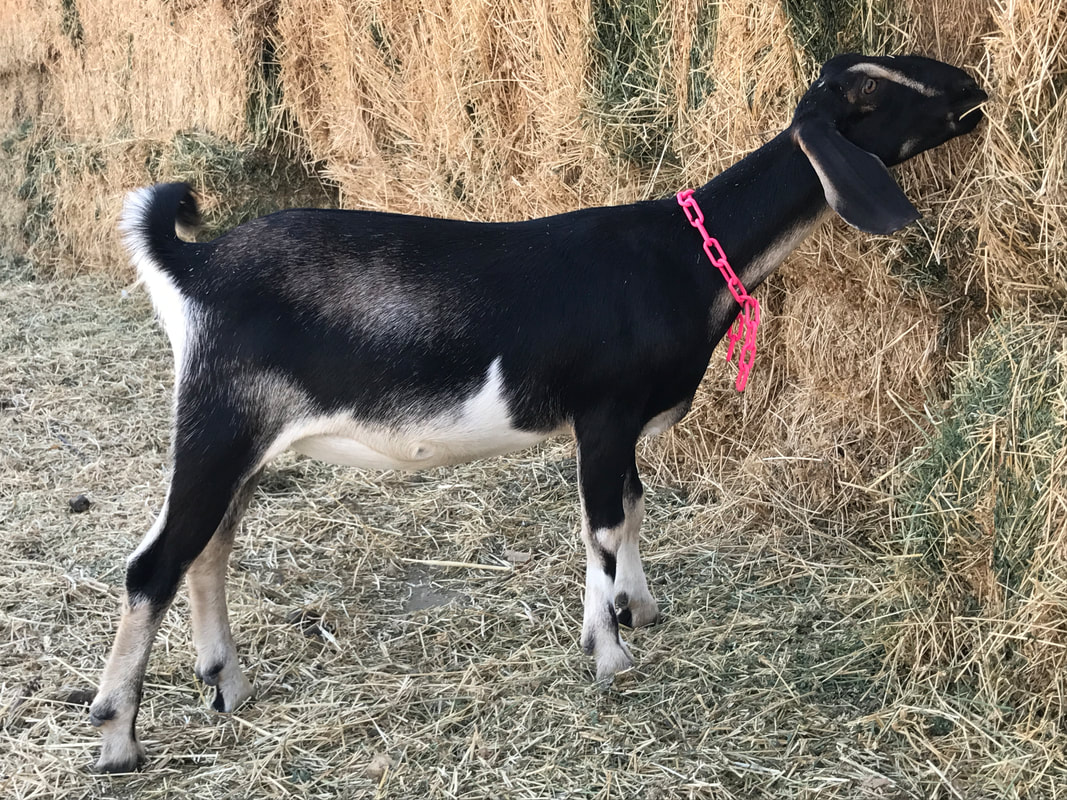
Does Feeding Alfalfa Hay Cause Urinary Calculi (Kidney Stones) in Goats?

6/28/2023

2 Comments

 
Jardine Meadows Jessie, Mini Nubian doe, eating alfalfa hay
Jardine Meadows Jessie helping herself to some yummy alfalfa
​If I feed my goats alfalfa hay, will it cause Urinary Calculi (kidney stones)?

This is the number one question I get asked by new goat owners. I get this question in one form or another so often that I have been meaning to write a post about it for years, but I kept forgetting. But when two clients recently asked me the same question two days in a row I finally decided I needed to write that post. So here goes!

Most people believe that the answer to the question is yes. Most of them are terrified to feed alfalfa, or at least to feed too much of it. Even veterinarians will often say alfalfa causes Urinary Calculi. But that is one of the biggest urban legends out there about feeding goats, and one that truly drives me crazy!
We go through tons and tons of alfalfa a year. My goats love it, as you can see!

The simple answer is that feeding alfalfa hay to goats doesn't generally cause Urinary Calculi. Urinary calculi is primarily caused by too much phosphorus in the diet. Grain, grass hay, and forage hay are all high in phosphorus. Feeding grain is the fastest way to cause stones since it is very high in phosphorous. Here at Prancing Pony Farm, we only feed grain to does when milking them. Bucks, dry does, and kids do not get any grain except for an occasional treat or bribe to get them to come into the barn. 

​Alfalfa is really good for goats, especially dairy goats. It's rich in calcium, with a ratio of 4:1 on average. Ideally, you want a balance of at least two parts calcium to one part phosphorus in the diet. Adding alfalfa can supply this needed calcium and help prevent kidney stones from forming. It's high in protein, calories, and other nutrients, eliminating the need for grain to put weight on most goats. Goats love it so they readily eat it. The only problem with feeding too much alfalfa is that some goats will get fat. But that's from overfeeding more than the type of hay used. When my bucks start looking pregnant I know it's time to cut back on the alfalfa! 😂
Feeding goats is hard work!

Some say that while goats need at least a 2:1 calcium-to-phosphorous ratio, feeding straight alfalfa will cause another type of kidney stone. I don't know if that's true, and I haven't seen it in my herd. People want to focus on one ingredient as the culprit in the diet when it's not that simple. Other mineral imbalances and dehydration can also cause Urinary Calculi. (Just like in humans.) So I recommend people use quality minerals and ensure their goats have fresh, clean water. Balance the grass hay with some alfalfa, and don't feed grain.

An alfalfa/grass mix is ideal for most people, especially for pet goats or males, who don't need excess calories. For my herd, I feed primarily straight alfalfa. That's because it's the most economical and best nutrition for breeding goats. Grass hay is too expensive here, so I don't use that for my goats at all. I was feeding grass hay to my ponies and my donkey for a while, but even they get straight alfalfa now. Occasionally I'll buy a little forage hay for variety, but the goats and horses tend to waste that. I prefer to feed alfalfa and have them eat it all.
Besides milking, this is how we use grain, and it doesn't take much!

I have been feeding straight alfalfa for seven years and have never had a goat with kidney stones. I heard the same thing about horses long before I had goats. I heard that if you fed horses too much alfalfa, they would get kidney stones. But most of my horses have eaten nothing but alfalfa most of their lives. And most of them have lived into their 30s. None of them have ever had kidney stones, either.

All my goats get alfalfa hay and Craftsmin organic loose minerals from Holistic Livestock Supply. I also add Premier One Supply's vitamin A, D, and E premix, to combat vitamin E deficiency. Because of the California droughts and our general weather patterns (we get rain only a few months of the year), we don't have green forage here most of the year. Even alfalfa can't supply enough vitamin E so adding the premix in helps. If I feed any grain to my milking does, it's usually whole oats, crimped barley, or COB, and used sparingly.

And that's how I feed my herd. Of course, wethers are more at risk for Urinary Calculi than does or bucks. I don't own any wethers so I can't share any experience there. I can only share what I do and how I feed my herd of bucks, does and kids. I urge everyone to research and do what works for them and their goats. ​
Goats will help themselves to yummy alfalfa!
2 Comments

It's Your Dog. There is No One "Right" Way to Raise, Train and Own a Livestock Guardian Dog, Even My Way.

6/23/2023

0 Comments

 
Picture
I will probably ruffle some feathers with this post, but something has been bothering me for a while, and I need to share my thoughts in my own rambling way. As a breeder and trainer of Maremma Sheepdogs and an advocate of the breed, I have been very vocal in how I believe Livestock Guardian Dogs should be raised and socialized as puppies. I firmly believe that LGD puppies should get a very early start with livestock and continue that way until they are grown. Puppies have critical socialization periods in the early weeks, and taking advantage of those periods by having them immersed with livestock at that age can ensure their future success as LGDs. 

I feel strongly about this issue because I have acquired puppies from breeders who raise their dogs as companion dogs in those first weeks and months. These pups were raised in houses, backyards, and patios, with no livestock exposure until they came to my farm at 3-4 months old. I have seen the effect of this lack of early livestock exposure on their training (it's a lot more work to train them) and how those dogs turned out compared to how my puppies turned out. I firmly believe that how I raise my pups is the best practice for LGDs, and what is advocated on some Facebook groups is terrible advice. I even wrote a blog post entitled "Debunking the Shepherd Way Myth of Livestock Guardian Dog Training."

I stand behind what I said in that post. However, I need to clarify what I mean by how I raise my puppies. I also have probably not understood what others mean when they refer to themselves as "shepherds."

After I wrote that blog post, I had an interesting discussion with someone in my Maremma Sheepdog Open Forum Facebook group who advocates the "Shepherd Way" of training. And I found that she and I had a lot more in common than we thought. So there is more of a communication issue than a conflict of beliefs here.

I have one adult Maremma named Titus, who is a companion dog. He lives inside my house full-time with my other three companion dogs. I bred him, and he was raised outside with the stock until he was 5 months old. He's been a house dog ever since. He is perfectly house-trained, leash-trained, and crate trained. He has gone on many walks in regular neighborhoods, to the dog park many times, to the vet, to the groomers, and on long car trips. None of this happened before he was 5 months old, but he quickly adjusted to this companion dog life.

​The "companion home" discussion is an issue for another post, which I hope to write soon. For years I turned down any requests for companion homes for my puppies. I did this primarily because of what other breeders said or what I read on Facebook. I now realize I missed out on many great homes for my pups for no good reason. And since I started saying "yes" to the occasional request for companion puppies, I have learned even more about these fantastic dogs. Choosing to keep one of my puppies as a companion dog has taught me even more. They really can thrive in pet homes. In the right home with a dedicated owner. Just like in working homes. It's primarily the commitment of the owner that matters. But again, that's a topic I plan to expand on another day.
Picture
Other than Titus, the rest of my Maremmas live outside with the livestock 24/7. They never come inside my house. But that is mainly because my house is several hundred feet from my barn and not attached by any fence. I would have to put them on a leash and walk them to my house to bring them inside. That is too much work when I am busy caring for a farm and running a business. But if my property were set up differently, I imagine my other Maremmas would come in to "visit" occasionally. Probably the goats, too. 😆

But because my dogs live outside, does that mean I'm not "shepherding" them? While I'm not too fond of the term, it's probably a relatively accurate description of my role with my dogs. I don't have an "off-farm" job. I run a business breeding dairy goats and Maremmas. I spend several hours a day outside taking care of my animals. I even sleep outside sometimes if puppies or goats are being born. Therefore I spend plenty of time bonding with my puppies and my dogs. I have no need to bring them into the house to bond with them because we bond outside. That is probably the main area where I differ from the "Shepherd Way" advocates.

I am NOT an advocate of the "hand-off" method of LGD training. Not at all. I utilize and advocate only positive training methods with my puppies. I also raise my puppies using Puppy Culture and Badass Breeder methods. I have a very carefully laid out puppy socialization program, exposing the puppies to sights, sounds, new people, and activities. This ensures that the puppies will be resilient and well-adjusted and thrive in various homes, including working or companion homes or something in between.

Another point I should make is that I sell puppies at 12 weeks or later. Most are in the 4-8 month range when they leave here. And I primarily sell puppies in pairs or to homes with another LGD, so there are no "8-week-old puppies alone in a barn" coming from my farm. Most of my pups are 50-60 lbs or more when they leave my farm. They aren't tiny babies.

​And if someone insists on owning a single LGD, I make it very clear that they will have to spend a lot of time with their puppy to compensate for the deficit. All of my dogs work in pairs or teams so I do not advocate single dogs alone with the livestock.
Picture
But the actual topic of this post is not how I manage my own dogs or socialize my puppies. That's just the backstory. My point here is that even though I believe what I am doing is right for my dogs and the puppies I breed, it is not the only way for people to manage their dogs. I am not of the "my way or the highway" camp. 

Obviously, if someone does not feel comfortable doing things the way I do or cannot do them, then my trying to force them to be just like me will not help them. And my goal as a breeder is always to help my puppy owners succeed with their dogs. I worry that people may have read my post and thought that if they did things any differently than the way I recommend, I would be mad at them or criticize them. And nothing could be further from the truth. 

Many of my puppy families do things differently than I do. I have had families who raised their puppies in the house for part of the time initially. Some may continue to let their dogs come and go indoors. Some clients bought their dogs as LGDs and later sold their farms. Their dogs transitioned to the companion dog life with no problem. 

Many of my families do fun and cool things with their dogs, like taking them on vacation, camping, to the beach, or on family trips. One family takes their dog regularly to their vacation home in the mountains. He goes on hikes with them to protect them from mountain lions. That's an excellent use of their dog and fun for dog and family alike!

The simple fact is that all these dogs have thrived under their owners' management. They succeeded because their owners were committed to making things work. They just made things work in the way that worked for them. I do not have a problem with that. Why should I? The dogs are happy, the people are happy, and, I assume, the livestock is safe in the dogs' absence. That is all that matters.
Picture
There is a person in the Maremma industry that I used to have a lot of respect for. I will call her "the Maremma guru" because that describes what she seems to believe she is. She is always talking about "what is true for white dogs" as if she is the only one that knows that truth. She seems to think she speaks for the Maremmas in much the same way that the Lorax speaks for the trees.

There are a lot of people in the LGD community that don't agree with her; people who have a much longer history and more experience with these dogs than she has. But she came onto the scene and declared herself the expert, refuting what people who had decades of experience said. I foolishly believed everything she said for a long time. I drank deeply from her particular brand of koolaide.

I used to tell people she knew more about the breed than anyone in the US. I promoted her tirelessly, referred many people to her for help and even had many links to her business on my own website. We had a lot in common and a lot we agreed on. There are still things we agree on.

But the more I got to know her, the more I realized that there was a lot that we disagreed on. There was a lot I felt like she was dead wrong about. (Like the Companion Maremma issue.) I no longer believe she knows as much as either of us thought she did. No one is right about everything. Being able to admit that is important. Eventually we parted ways and we are both better off for it. I know I am, anyway.

One thing I thought I had in common with her was this belief that the "Shepherd Way" was wrong. But as I talked to other people, I realized that I had more in common with advocates of the Shepherd Way than I thought and less with her. And I realized that being a shepherd is not a bad thing or a good thing. It's simply how some people describe their interactions with their dogs. It's a funny term, but I don't have a problem if people want to use it.

When the Maremma guru and I were still friends, she used to refer people to me occasionally to buy puppies. In almost every instance, she told me that she was "sending someone my way" because they were "not good enough" for her dogs, but they would be "fine" for me. I was always unsure about how I should take that. 🤔 It seemed like a backhanded compliment. But I appreciated the referrals.

Most of these people she "sent my way" never contacted me, but a few did buy dogs from me. The first time it happened, she later told me, "I can't believe you sold him a puppy." She didn't like the guy, and I think her referral was a test. Apparently I failed the test. I told her he was a very nice guy with a lovely farm, his other LGD needed a partner, and his sheep required protection. And I told her she shouldn't have referred him to me if she didn't want me to sell him a puppy. 🤷🏻‍♀️ That ended the discussion.

Another time she referred someone to me to buy a puppy as a partner for her adult LGD. She told me the client used an invisible fence, and I "would have to discuss what to do about that" with her. Again, this seemed like a test. I talked to the client. She told me she has an easement that requires her neighbors to drive through her property to get to their house. This means she can't have a gate across her road. She uses only positive training with her dogs and cats but uses an invisible fence to keep them safe. I have a couple of fence jumpers, so I understand that dilemma. A hotwire at the top of my fence was the only solution I found that worked. And an invisible fence makes sense for this client. It certainly is better than a dog getting out. Being hit by a car is as aversive as you can get. 😢 I gladly sold her the puppy, and she's been one of my best clients yet. I hear from her almost weekly, with frequent photos and updates. I may have failed the Maremma guru's test, but my puppy won, big time, in getting a wonderful home, invisible fence and all.
Picture
​Another person was referred to me by the Maremma guru around the same time as the invisible fence client. The Maremma guru had sold dogs to this new client's neighbors and repossessed them later. (She did this frequently whenever a new owner did something she disapproved of.) I knew about that situation because the Maremma guru told me about it without remorse. And why, you might ask, did the Maremma guru repossess the dogs? What terrible thing did the clients do? She told me they "made the dogs into pets." Meaning they let them in the house occasionally. Shocking, I know.

When my new client came to me, she was extremely nervous about buying dogs, partly because she had seen what the Maremma guru had done to her neighbors. She told me it was traumatic, with lots of begging, crying, and screaming when the dogs were taken away. I was later told by another party that those people had bought the dogs from the Maremma guru in the first place because their previous dog had died. Of course, that made the whole situation all the more traumatic. I can't imagine inflicting that kind of pain on people without just cause. And just cause would be something like abuse of the dogs. That was not the case here, from what I've heard.

My new client had already placed a non-refundable $1000 deposit on two pups, but when the dogs were ready to go, she was still having second thoughts. Until the day she took them home, she debated backing out on the sale. She was apprehensive that something would go wrong. And a lot of the reason why she was so worried was because of her neighbor's experience with the Maremma guru.

The client lives in Oregon, so she drove to my farm in California "for a visit and to maybe get the pups." Her visit required two days and an overnight hotel stay. On the first day, she spent five hours at my farm, interacting with the puppies and asking me a million questions. She asked me what she should do if she wanted to go on a trip. Could she take the dogs? Her husband races cars, and they go out of state for his races. She wanted to know if it would be ok if they brought the dogs along. I told her that as long as her livestock would be safe at home, there was no reason not to take the dogs if she wanted them to go. 

This client spent five hours asking me one question after another like she was testing me to see if there would be something I would say that would be a red flag to her. She was worried that she would do something wrong and that I would repossess the dogs like the Maremma guru had done to her neighbors. 

I finally told her that while the Maremma guru and I agreed on a lot and respected her very much, I was not her. I did things very differently and I was not going to repossess her dogs. I told her that once the dogs left my farm, they were no longer mine, and it was not my business or choice what she did with the dogs. I told her what I always say to my clients. "They are your dogs; you can do whatever you want with them. You don't need my permission or my blessing." 

She went to her hotel to think it over. Then she called the following day to tell me she was buying the puppies. She came and got the two she had liked the best and took them home. And she has been a wonderful puppy owner. I don't know if the dogs ever go on race car trips with her and her family. It's not my place to ask. They are no longer my dogs.
Picture
Now I would not advocate anyone doing anything to harm their dogs, and that includes using aversive training methods. But if somebody wants to take their dogs on outings or on vacation or let them sleep in the house with them every night, that is their business. Truly.

This is not to say that I don't believe that my way of training is not superior to how a lot of people manage their dogs. I do. How I train works best for me as a breeder, and it's what works best for my livestock. Having owned dogs raised my way and the opposite way, I would never again buy a puppy from anyone who doesn't raise puppies the way I do. No more patio puppies for me! But that's my personal choice, based on what works for me. 

And I will continue to raise my puppies the way I do while they are under my care because it's the ideal way to raise, train and socialize LGDs. The proof is in the dogs I have produced over the years. But once those puppies leave here and go to their new homes, they are no longer my dogs. And my puppy owners need to do what works for them and their new dogs. 

So don't worry. If you buy one of my puppies and want to do things differently from the way I do, I will not be mad at you. I'm not going to tell you you're doing it wrong. Instead, I will do my best to support you. Because it is not my dog anymore. It's your dog.
Reserve Your Maremma
0 Comments

Jess, an Incredible Livestock Guardian Dog whose Life Was Cut Tragically Short by Bloat

6/20/2023

2 Comments

 
Jess, Maremma Sheepdog
Jess - March 31, 2019 - June 14, 2023
I have owned Maremma Sheepdogs since 2016 and have been breeding since 2017. I have had the honor of placing my puppies in many wonderful homes throughout the United States and Canada. Our puppy families absolutely adore their dogs and many of them stay in contact with me, even as far back as my first litter. I hear from some of them several times a month or more. Others send me occasional updates and photos. People are busy so I understand if not everyone has time to keep in touch. But I really appreciate those who do. I never tire of hearing how my pups are doing, how they serve their owners as Livestock Guardian Dogs or companions, and how much they are valued and loved. I especially love receiving photos of the dogs with their human and animal families. This connection is so special and makes me feel that I still know these dogs, even though I have not seen most of them in person since the day they left my farm. 

For a long time I have wanted to start a blog post series about the amazing dogs I've bred and the lives they live out in the world, in their various jobs and families. I wanted to give people a glimpse of what life looks like for these cute little puppies after they leave my farm. The dogs I've bred are living and working in such a wide variety of homes, from small one acre urban homesteads to huge ranches of hundreds of acres. They guard everything from chickens and goats to Emus and Dressage Horses, and everything in between. A few guard only their human families or the other family pets. All are wonderful dogs, doing important work and very beloved by their owners. There are a lot of great stories to tell so I knew this new series would be both educational and entertaining for my readers.

​However, life sometimes goes differently than planned when you own animals. Sometimes as a breeder, we are called to mourn with our clients instead of celebrating. That was the case recently when one of my puppy families lost their dog tragically and unexpectedly to bloat, or Gastric Dilation-Volvulus. Her name was Jess, and she was an incredible Livestock Guardian Dog and much loved member of her family. She was only 4 years old when her life was so cruelly cut short. So in order to honor Jess and raise awareness about bloat in dogs, I am writing my first post in this new series about her.

The Story of Jess, Beloved LGD and Family Member

Maremma Sheepdog puppies with family
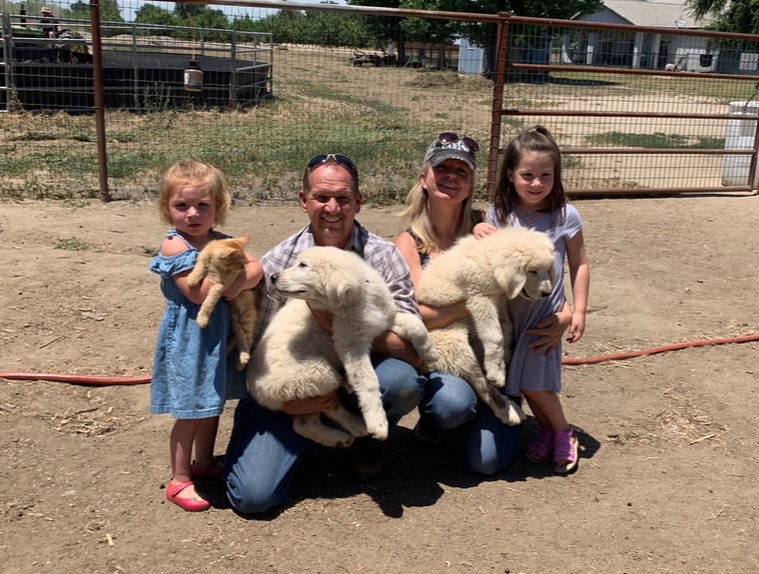
Randy & Stacey, with granddaughters Sadie & Lily, the day they picked up Jess & Jack from my farm
Jess was owned by my client, Randy and his wife, Stacey. They raise Soay sheep, a small breed of sheep which they use for fire abatement. (The sheep eat down the excess vegetation around their house and property, reducing the risk of forest fires.) They run a flock of around 60 sheep in bear and mountain lion country in northern California. Bears and lions are some serious predators, but thanks to Jess and her other Maremma partners Randy and Stacey have never lost a single sheep.  

Randy and Stacey first visited my farm in 2019, when their family came to choose two pups from my third litter of Maremmas Sheepdog puppies. The parents of the puppies were my first two unregistered Maremmas, Olaf and Genevieve, whom I still own today. Accompanied by Randy and Stacey were their daughter, Shelbie, who was soon to be leaving for college, and their two adorable and sweet granddaughters, Sadie and Lily.

I immensely enjoyed the couple of hours the family spent visiting with the puppies and me. They met parents Olaf and Genevieve, and one-year-old big sister, Polar. (Polar was born in 2018 in Olaf and Genevieve's second litter.) They asked many thoughtful questions and discussed the merits of each puppy with me and each other. They intended to buy two puppies for their farm, but choosing two from a litter of nine was no easy task! But eventually, the family did choose their pups, a brother and sister they would later name Jack and Jess. The puppies were not quite ready to leave yet, so they came back 2 weeks later to pick them up. I enjoyed occasional updates about the pups from Randy after that, as well as photos of the dogs with the family and the sheep.
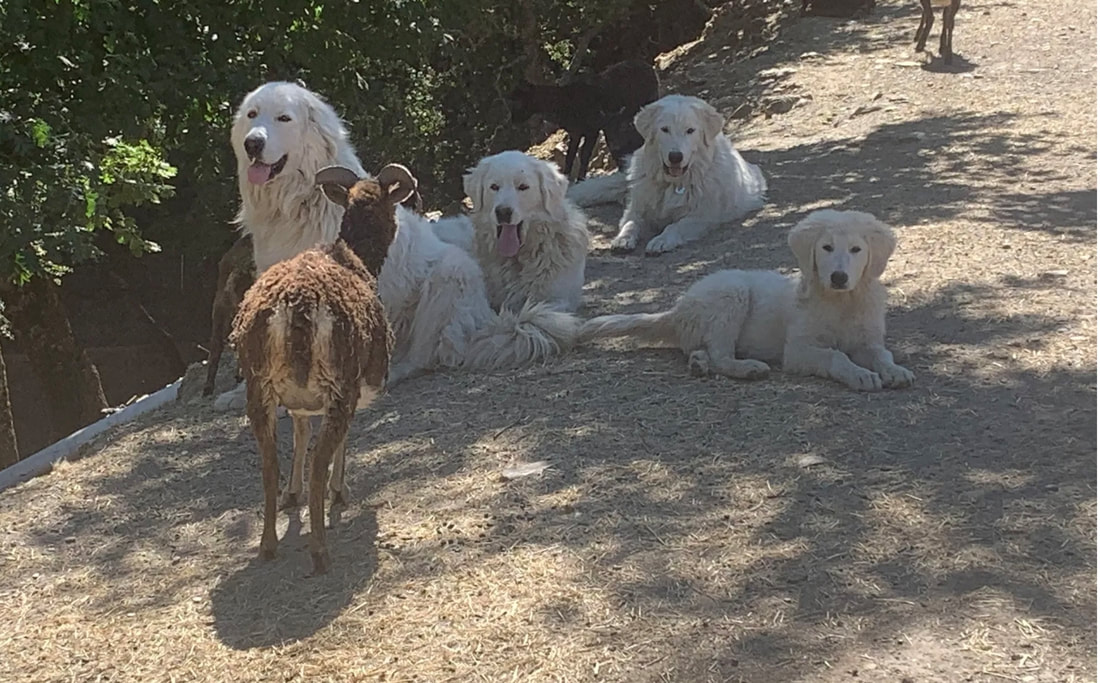
Photos of Jess and Jack's Litter
In 2021, Randy returned to purchase an MSCA registered breeding male for his farm. Like me, Randy greatly valued his unregistered Maremmas, but had decided to transition into breeding MSCA-registered dogs. He also purchased a breeding female from another MSCA breeder around the time that he bought his third puppy from me. Randy came by himself to pick up his new puppy, whom he named River.

Again, I really enjoyed my time talking with Randy. He is such a nice person and we share so much of the same goals and values in relation to Maremmas, including a deep love and respect for the breed. He told me how much he adored Jack and Jess and what excellent LGDs they were. He also told me that Jess was his particular favorite of all his dogs and pure perfection as an LGD. I feel the same way about Polar, whom I consider my best LGD, so this made me very proud to hear. 
Photos of River's Litter
Jess & River
Jess & River
Randy sent occasional updates about Jess, Jack, and River over the next few years. He later told me that he had made the decision to spay the breeding female he had bought from the other breeder. He said that while he loved her and would keep her, her temperament was much harder to manage than Jess, Jack and River's and required a lot of extra training. He didn't want to risk passing that temperament on to puppies or causing difficulties for potential owners, so he spayed her. I applauded him for making the right decision for the breed and future puppy owners.

He told me that all three dogs he had bought from me were outstanding LGDs. He calls them, "Plug and Play", a term I love and that describes perfectly what I have seen in Polar and the other pups I've bred. He also said that he had decided that he was going to breed Jess to River, even though the puppies would not be eligible for registration and, thus, would not sell for as much money as puppies from his other female would have. He chose Jess as a breeding dog instead of his registered female because her temperament was perfect, and he knew that temperament was what mattered most in an LGD. Once again, he placed what truly mattered over profits. This showed his true character and commitment as a breeder. Jess went on to produce two litters, sired by River.
Maremma Sheepdogs guarding Soay sheep
Jack (L) and Jess (R) with their sheep
A Very Sad Day
I hadn't heard from Randy for a while, but on June 14th, 2023, he texted to let me know that Jess had died of bloat earlier that day. He said he had seen her at 8 am that morning and she appeared fine, but when he again saw her at 11:45 am she was very sick. He reported that her abdomen was large and tight as a drum, her gums were white, and she was very ill. Randy immediately rushed her to the vet. By the time they got there she could not walk and had to be carried in on a stretcher. They attempted emergency procedures but sadly, she did not make it. Randy and his family were understandably devastated over the loss of such a wonderful, beloved dog.


The news of Jess's death was heartbreaking for me. I felt grief for Randy and his family and immense sadness that such a great dog had endured such a terrible end. But I greatly appreciated Randy letting me know what had happened. As a breeder, I care deeply about the puppies I bring into this world and the families they eventually end up with. And part of that caring is sharing the happy times as well as the tears with my clients. Therefore I appreciate it when owners keep in contact with me, even when they share sad news. 
Maremma Sheepdogs guarding Soay sheep
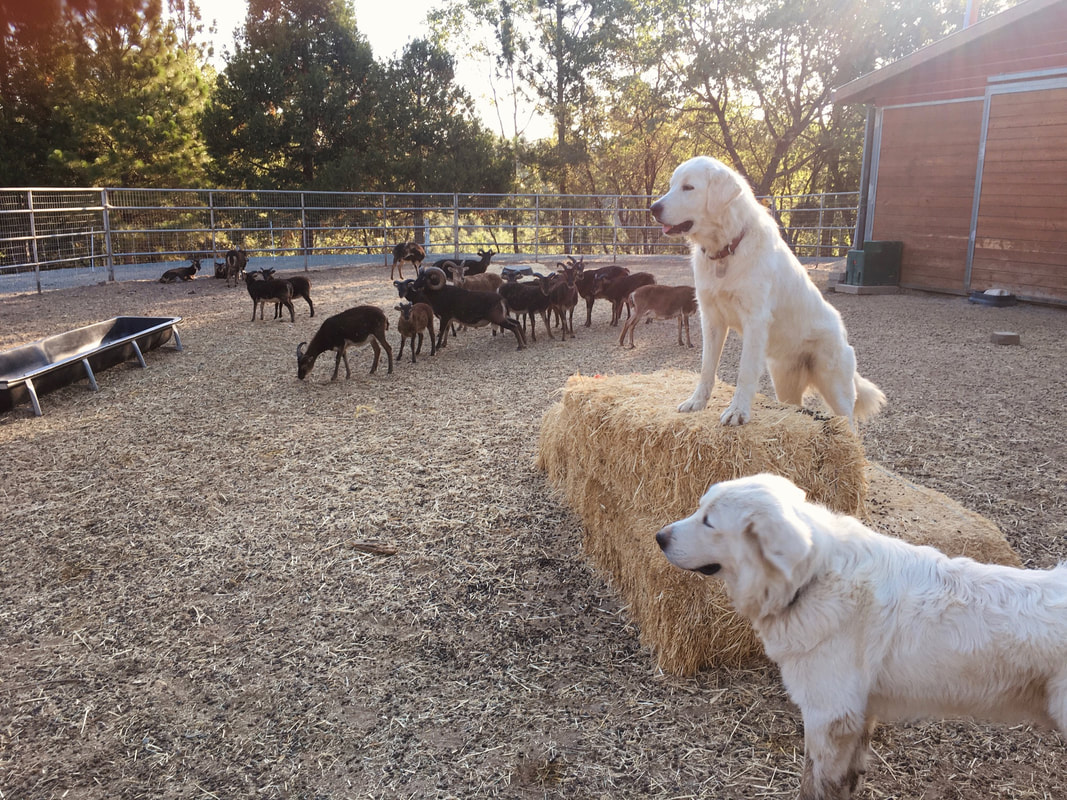
Jess (on top of hay bale) and Jack

I also appreciated Randy sharing the news of Jess's death for another reason. I knew that bloat was a health risk in all large breed dogs, but I had never really researched it much, so I didn't know much about the illness or how much of a risk it was for Maremmas.

I have had two other puppy owners over the years who reported to me that they found their young, healthy dogs dead, with no idea what happened. The last time they saw the dogs they were fine. Then they were gone. Both owners were understandably devastated. I wondered both times if their deaths could have been due to bloat. Both dogs were full siblings to Jess. One was a year older (from the same litter as Polar) and the other was from the same litter as Jess and Jack. Of course we will never know what those dogs died of, but after hearing the news about Jess I am even more inclined to think it was bloat.

But now that I knew that a dog I bred had succumbed to the disease, I decided it was something I should research. Randy shared some information his vet had given him, and I also did my own research. Below are a few things I learned that might be useful to owners of Maremmas or any other breed. And just maybe this information can help save other dogs like Jess. 

What All Dog Owners Need to Know About Bloat or Gastric Dilation-Volvulus

Bloat, or gastric dilation and volvulus (GDV), is one of the most dangerous and painful conditions a dog can get and is fatal if not treated. One article I found during my research called it "The mother of all emergencies." No one knows exactly how many dogs in the US are diagnosed with bloat, but some estimates are as high as 60,000 cases per year. Unfortunately, many dog owners know little to nothing about this condition until it is too late, and they have lost a beloved dog to it. If you would like to maximize your chances of preventing your dog from succumbing to this terrible illness please read on.
"Many injuries and physical disorders represent life-threatening emergencies, but there is only one condition so drastic that it overshadows them all in terms of rapidity of consequences and effort in emergency treatment: the gastric dilatation and volvulus – the bloat."
​~ Wendy Brooks, DVM DABVP
What is bloat?

​Bloat is a condition in which food or gas stretches the dog's stomach, causing extreme pain. Sometimes the stomach twists, causing even more damage and sure death if not treated quickly. Dogs that weigh more than 99 pounds have a 20% risk of bloating. (That means most Maremmas are at risk.) Deep-chested breeds are most at risk, but any dog of any breed can bloat. ​​

​Below is a link to a list of the breeds that are most at risk for bloat. While Maremmas are not specifically mentioned (probably because they are a less common breed so most vet practices never see one) they are similar in conformation to many of the listed breeds, including Great Pyrenees.
Breeds That are Predisposed to Bloat
Factors that are believed to increase the risk of bloat are:

  • Increased age
  • Having close family members who have bloated (A genetic predisposition)
  • Eating too quickly
  • Overeating
  • Feeding from a raised bowl
  • Exercising after eating
  • Feeding dry food with oil as one of the first four ingredients
  • Drinking a lot of water in a short period
  • Stress and anxiety (Reduce stress for your dog, if possible. This is another reason to always keep LGDs in compatible pairs or teams and to use positive training methods only.)

Signs of bloat:

  • Restlessness
  • Anxiety
  • Distress
  • Pacing
  • Distended or swollen abdomen
  • Excessive drooling
  • Extreme panting
  • Unsuccessful attempts at vomiting
  • Inability to stand
  • Collapse

If you suspect your dog is bloating, you should immediately rush him to the vet. Bloat can be fatal if not treated within an hour or two of the onset of symptoms. The treatment is complicated and may require emergency surgery, among other measures. Sadly, despite heroic efforts, 30% of dogs who receive emergency treatment will die anyway. Taking preventative measures is worth trying because bloat is so life-threatening and challenging to treat. ​

If you have horses you may think that bloat sounds similar to colic in horses. I did. But what I learned is that bloat is actually much more dangerous and a bigger emergency than colic. Whereas some horses get over colic with mild intervention by their owners, bloat always requires immediate medical treatment. If you suspect your dog is bloating get him or her to the vet immediately.


Some factors that might decrease the risk of bloat are:

  • Adding table scraps, canned food, or other supplements (goat milk, water, broth) to the dry dog food
  • Feeding a dry food with a calcium rich meat meal in the first four ingredients
  • Feeding two or more smaller meals instead of one large meal per day
  • Not allowing the dog to drink too much water at once
  • Restricting exercise for 1-2 hours after meals
  • Avoiding raised food bowls unless medically indicated
  • Using slow feeder bowls if your dog bolts their food
  • Not allowing your dog to overeat​
  • An easy-going, relaxed temperament. (Reduce stress for your dog, if possible. This is another reason to always keep LGDs in compatible pairs or teams and to use positive training methods only.)
Gastropexy
Another preventative measure that may help save dogs from bloat is a surgery called a gastropexy. This is an elective surgery where the stomach is tacked to the body wall. This can be done during a spay or neuter procedure and reduces the likelihood of the dog bloating by as much as 95%. 
​

Moving On - Life Without Jess

Randy told me that he had been feeding his adult dogs once per day for years (as do I) with no problems. He uses the same brand of food I do (Diamond Naturals) mixed with wet food. That brand has no oil in the first four ingredients but has the recommended meat meal, so it should be a "safe" formula.

​He said he would be switching his dogs to twice-per-day feedings and having gastropexy done on all of them at the time of spay/neuter. He said, "We never want to go through this again, and it's a simple procedure to eliminate the risk."

"We never want to go through​ this again, and it's a simple procedure to eliminate the risk. ~ Randy

Randy still owns Jack, Jess's littermate brother; River, the other dog he bought from me; and Prairie, the spayed female he purchased from another breeder. He also is blessed to still own three of Jess's puppies. He will keep one of them so that her legacy lives on in her absence. He said, "We miss her and can't believe she's gone." ​

"We miss her and can't believe she's gone." ~ Randy

Having lost beloved animals of my own, I can sympathize so much with Randy and understand the pain he feels. Those exceptional animals are the hardest to get over. I don't think you ever truly can. But over time, you can eventually get to a place where you remember the good times instead of being blindsided by the overwhelming pain of their loss. My prayer is that Randy and his family would get to that place soon. But having gone through similar losses many times myself, I know it will take as long as it takes to heal their broken hearts. 

More Information on Bloat

If you own a Maremma or other large breed dog, I urge you to research bloat, and take whatever preventative measures you can to prevent this terrible illness from taking the life of your precious dog. I know I will be making some changes with my dogs, just as Randy is. Below are some links to get you started on learning how to protect your dog:
​
  • Bloat, the Mother of All Emergencies (Veterinary Partner)
  • Bloat (Or GVD) in Dogs: What it is and How Is it Treated? (AKC)
  • Bloat in Dogs (Pet MD)
  • What is Gastric Dilation-Volvulus (Bloat)? (Veterinary Medical Center)
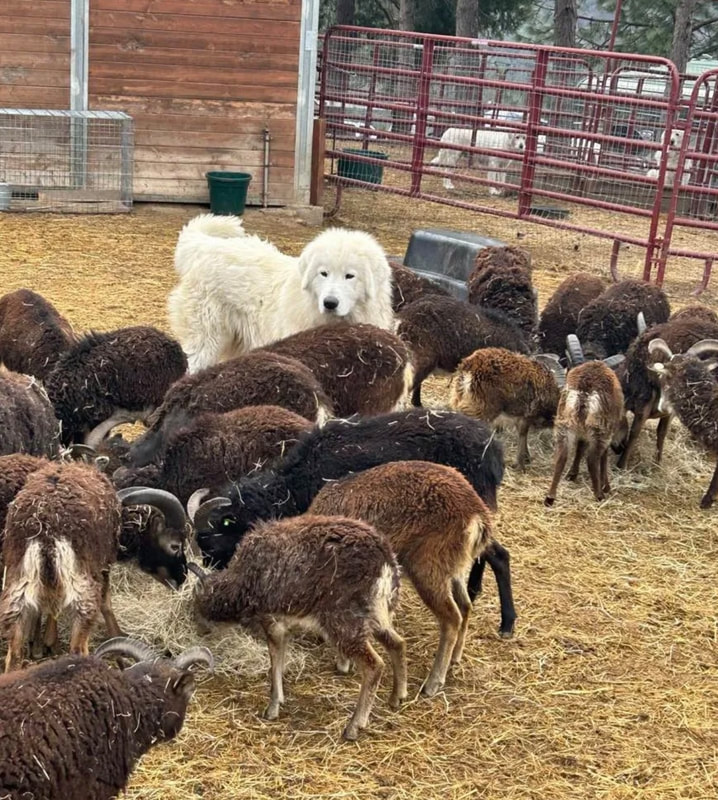
Maremma Sheepdog with sheep
Jess, faithful guardian to the end, gone but never forgotten
If you enjoyed this story about Jess and found this information on bloat helpful please share this post, to help raise awareness of this dangerous health risk to dogs. If you would like more content like this please subscribe to our mailing list. Thank you.
Subscribe
2 Comments

What Are Mini Nubians and What's So Great About Them?

6/5/2023

2 Comments

 
What are Mini Nubians? 

Mini Nubians are a mid-sized dairy breed that crosses Nigerian Dwarfs and standard-sized Nubian goats. Mini Nubians can be registered with MDGA, TMGR, and IDGR if they come from registered parent stock. These parents can be ADGA/AGS Nigerian Dwarfs, ADGA standard Nubians, or registered Mini Nubians of any generation. Mini Nubians are registered in three categories: Experimental (F1-F2), American (F3-F5), and Purebred (F6 and up). 

You cannot use breeds other than Nigerian Dwarfs, standard Nubians, or Mini Nubians to produce Mini Nubians. Not Pygmy goats, fainting goats, Boers, or anything else. Just a combination of Nigerian Dwarf and Nubian.

You should always cross the smaller (or same size) breed buck with the larger doe. So Nigerian Dwarf buck to standard sized doe, or Mini Nubian buck to Mini Nubian or standard Nubian doe. You should NEVER breed a standard-sized Nubian buck or Mini Nubian buck to a Nigerian Dwarf doe. (Nor is it wise to breed a standard Nubian buck to a Mini Nubian doe.) The resulting kids could be too large for the doe to safely deliver, resulting in the need for veterinary intervention, a c-section, death of the kids, or death of the doe. It is not worth the risk!
Prancing Pony Elodie Purebred Mini Nubian doe and kids
Prancing Pony Elodie, Purebred (F6) Mini Nubian and her F1 kids.
What's so great about Mini Nubians? Why are they better than standard Nubians or Nigerian Dwarf goats?

The advantages to Mini Nubians are that they produce milk similar in butterfat content to Nigerian Dwarfs, but more of it. (Butterfat is what makes milk sweet and creamy.) Many of them produce as much milk as standard-sized Nubians. They are also taller than Nigerians and usually have bigger teats, making them easier to milk. 

Weighing on average 100 lbs (bucks weigh a bit more) and standing 23-29" tall for does and up to 31" for bucks, they are smaller than standard Nubians, making them easier to handle and transport. (We transport ours in a large dog crate in our minivan.) 

They are ideal-sized goats for small farms and homesteads and are easily handled by women and children. They cost less to feed than standard Nubians, making them very fuel-efficient dairy goats, or as most Mini Nubian lovers call them, the Goldilocks goats!
Jardine Meadows Jessie's udder - F1 Mini Nubian doeJardine Meadows Jessie's udder - F1 Mini Nubian doe
What are the generations of Mini Nubian, and what does it all mean?

Mini Nubians are registered in generations from F1 to F6 and beyond. F1s and F2s are registered in the "Experimental" herdbook. F3s to F5s will be registered as "American" if they meet the standard for that herdbook. Technically F6 and up are considered "Purebred," but if a goat doesn't meet the standard to be considered Purebred (Could be too big, ears too short, etc.), it might be put back in a lower herdbook.

Understanding the generations is where most newcomers need clarification. An F1 is a first-generation cross between a Nigerian buck and a Nubian doe. But it's also the cross between a Mini Nubian buck of ANY generation and a standard-sized doe. And there are numerous ways to go "up the generations" to get to purebred status. And numerous reasons why doing that doesn't really matter, but we'll discuss that later.

In theory, you would breed two F1s and get F2s and two F2s and get F3s, and so on and so on. In reality, no one does it that way, and that's NOT the best way to produce quality goats. 

You don't want to focus too much on generations but on getting the whole package right. Correct conformation, fantastic udders, and good milk production should come first, breed character and proper size next, and worry about generations last, if at all. The generations are more of a way to track the goats but don't indicate quality.

For now, the easiest way to know what generation your kids will be is to know that the kid is always one generation higher than the LOWEST parent, with standard Nubians and Nigerian Dwarfs being 0 generations. So F1 x F6 = F2. F2 x F2 = F3 but F2 x F5 also equals F3. And so on.

How do I breed Mini Nubians? Where do I start?

To start a new line of Mini Nubians, you should begin with a registered Nigerian Dwarf buck and a registered Nubian doe. You breed those two goats together, and their kids would be eligible for registration as F1 Mini Nubians. These kids usually have airplane ears and straight noses and look more like large Nigerians than Nubians. But don't worry; you will fix the breed character in successive generations!

Of course, many already established Mini Nubians lines are out there, and you only have to start a new line if you want to. You can use two Mini Nubians goats to produce more Mini Nubians. 

Or you can breed a Mini Nubian buck to a standard Nubian doe to get first-generation Mini Nubians. These F1 Mini Nubians will likely have much better breed character (Look like Nubians) than the Nigerian/standard Nubian crosses but they will probably be a bit on the larger size than is ideal. But that's ok because you can bring the size down through successive generations. ​
Urban Acres RB Cassia - standard Nubian doe
Miracle Kids AD King and Country - Nigerian Dwarf buck
What is the difference between conformation and breed character, and where does breed character fit into breeding Mini Nubians?

Conformation means the structure of the goat - how all the parts fit together. Proper conformation is the same for all dairy goats, with a few minor exceptions that fall under the breed character category. Breed character means what makes Mini Nubians look like standard Nubians (only smaller) - long, floppy ears and Roman noses, primarily. 

Lower generation Experimentals (F1-F2) with a lot of Nigerian blood (like the spotted, 50/50 cross in the photo below) usually have airplane or 2/3 drop ears and look like oversized, funny-looking Nigerian Dwarfs. In contrast, Experimentals with more Nubian blood (such as from standard Nubian does bred to Mini Nubian bucks, like the tan doe in the photo below) usually have excellent breed character but could be on the larger size. In the experimental herdbook, these traits are considered acceptable, even to be expected.

Once the goats get into the American herdbook, they should begin to look like standard Nubians, only smaller, with the adorable floppy ears and Roman noses we all associate with Nubians. Once they reach Purebred status, they should look like miniature versions of their larger cousins! If they are oversized or don't have good breed character, they may be moved back to the American herdbook, no matter what their "F" number is. 

All generations of Mini Nubian come in a wide variety of colors and coat patterns, including moonspots, and any generation can have blue eyes (or brown) because of the Nigerian influence. And all are beautiful, intelligent, affectionate, and have wonderful and unique personalities.
Terjana Hermia - F1 Mini Nubian doe
Blackberry's BSN Lavender - F1 Mini Nubian doe
So what is the best generation for me? Does it matter what generation I get if I want to milk, show, or have family pets? 

This part confuses most people who are new to Mini Nubians. They often believe that the generations matter most, and the higher, the better. The real answer is that F generations don't matter at all. Before you worry about the Fs, you want to focus on finding or breeding goats with good conformation, quality udders, excellent milk production, etc. 

A lower generation goat can be better quality in the areas that matter than a higher generation goat. It just depends on the goat. Some awful-looking higher-generation goats are out there - poor udders, bad conformation, poor breed character, and low milk production. And there are some fantastic lower-generation goats out there. It's more about the genetics you started with and how well they combined to produce the next generation than the "F" number. Better to start with animals that are structurally sound and have the essential traits that matter first than to get hung up on breeding by the numbers. 

In the higher generations, you do want to see goats with good breed character (and in the correct size range), but in reality, breed character only matters if you prefer the more Nubian-looking goats. Some people prefer airplane ears or don't care about breed characters. They just want structurally sound, quality goats. But if you love the traditional Nubian look, buy or breed that type of Mini Nubian.

But also understand that traits like ears and noses are the easiest to improve in one generation. In contrast, structural issues, udders, and milk production can take more generations to improve. If you focus too much on breed character without getting the basic structure right, you could end up with poor-quality goats. So if you want a quality herd, you should focus on those more important things first, taking time to improve traits as you go.

Most of all, don't think of it as a numbers game, and don't focus on the numbers just for their sake. That's how you can end up with poor-quality goats. An F6 or F7 with an awful udder, low milk production, bad conformation, or poor breed character is not an asset to your herd. When a goat reaches F6, it should be near perfect. Only then does the "F" mean anything. 

But in reality, many of my most perfect goats of all time are or were lower generations. My favorite and most excellent doe I've ever had was Jessie, who I lost in 2022 after a complicated kidding. Jessie was only an F4, but I would not have traded her for any goat in my herd or anywhere. She was as close to perfection as possible. 
Jardine Meadows Jessie F4 Mini Nubian doe
The F's don't matter when making breeding decisions or deciding who to keep. I match my does with whatever buck will give me the desired traits I want to see in her kids. I usually have to think about it to remember their numbers. 

If you want to buy or breed Mini Nubians, you should forget the F's and pick the goats you like the best for other reasons. Choose the goats you feel will help you reach your goals, and the goats you like, not the goats someone tells you you "should" choose. Remember that breeding goats is as much art as math or science. And that the goal is to have fun!

At Prancing Pony Farm, we breed Mini Nubians from first-generation Experimental to 6th generation Purebred and beyond, all registered with MDGA and some with TMGR. Our goats come from strong dairy lines, and we breed for excellent milk production, sound udders, correct conformation, wonderful temperaments, and beautiful colors and patterns. We strongly believe that a great dairy goat should be beautiful, sweet, functional, and sound and be a joy to own. It should make you happy to see it in your pasture, and spending time with it should be rewarding. Producing that type of animal is our goal in breeding our Mini Nubians. If you are looking for this type of goat you can fill out our Goat Questionnaire and reserve a couple of Prancing Pony Mini Nubians today!
Happy Goat Farm Simba with a 2023 Mini Nubian kid
Prancing Pony Maremma Puppy and Mini Nubians
  • Mini Nubian Ears
  • Milking Mini Nubians Versus Nigerian Dwarfs
Reserve Your Goats!
2 Comments

    Author

    Hi I'm Kim. I have been an avid animal lover all my life but goats and dogs are my favorites so I built a business around them, breeding registered Mini Nubian & Nigerian Dwarf dairy goats and MSCA registered Maremma Sheepdogs. I love sharing my passion and knowledge of these amazing creatures with others.

    RSS Feed

    Subscribe to Our Blog

​"Above the arch there was a lamp, and beneath it swung a large signboard: a fat white pony reared up on its hind legs. Over the door was painted in white letters:
​The Prancing Pony by Barliman Butterbur."
~ from The Fellowship of the Ring: Being the First Part of The Lord of the Rings.

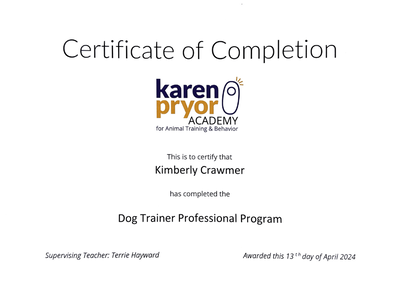
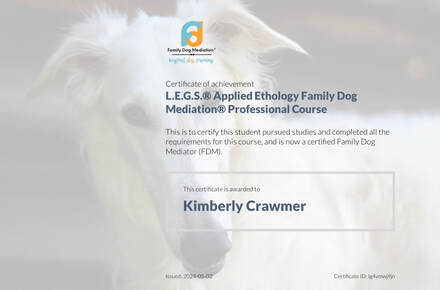
Struggling with LGD training advice that doesn't work?

Get weekly proven strategies from a certified dog trainer who's raised 150+ Maremmas and helped countless livestock owners succeed.

​

You'll get:

  • ✓ Real solutions for common LGD problems
  • ✓ Science-based training methods that actually work
  • ✓ Breed-specific Maremma insights
  • ✓ Free buyer's guide + training resources

​

Join 1000+ smart livestock owners who've stopped guessing and started succeeding.

    We respect your privacy. Unsubscribe at any time.
    Built with Kit
    Picture
    Reserve My Maremma!
    Reserve My Dairy Goat!
    Picture
    We are located in Lemoore, California.
    Visitor Policy
    Get Our Free Maremma Buyers' Guide!
    Picture

    Amazon Disclosure: Prancing Pony Farm is a participant in the Amazon Services LLC Associates Program, an affiliate advertising program designed to provide a means for sites to earn advertising fees by advertising and linking to amazon.com.
    • Home
      • Our Story
      • Contact us
      • Veterinarian's Letter of Recommendation
      • Sales Policies
    • Mini Nubian & Nigerian Dwarf Goats for Sale
      • Why Choose Us?
      • Our Goat Reservation Process
      • Adult Goats for Sale
      • Kids for Sale
      • Our Dairy Goat Herd
        • Mini Nubian Does
        • Mini Nubian Bucks
        • Standard Nubian Does
        • Nigerian Dwarf Does
        • Nigerian Dwarf Bucks
        • Current & Past Kidding Seasons
          • 2025 Mini Nubian Kids
          • 2025 Nigerian Dwarf Kids
          • 2024 Kidding Season
          • 2023 Mini Nubians
          • 2023 Nigerians
          • 2017-2022 Kids
    • MSCA Registered Maremma Sheepdogs for Sale
      • Maremmma Sheepdogs for Sale
      • Why Choose Us?
      • Our Puppy Reservation Process
      • Available Puppies
      • Current & Past Litters
      • Maremma Gallery Page
    • Livestock Guardian Dog Training
      • Livestock Guardian Dog Training & Consulting
      • About Kim Crawmer
      • Family Dog Mediation
      • Keeping Kids safe With LGDs
      • The Perfect Formula for Training Incredible Livestock Guardian Dogs
    • Free Goat & LGD Membership
    • Prancing Pony Farm Blog
    • Goat Care Info
      • Dairy Goat Blog
      • The Doe Code
      • Bringing Home Your New Goat
      • Health concerns of your new goat
      • Dairy Goat FAQ's
      • Goat Care Articles & Links
      • Clicker Training Goats
      • Supplies for Goats
      • Feeding Mini & Dwarf Baby Goats
      • Housing Does & Kids
      • Goat Parasites
      • Annual Disease Testing of Goats
      • Goat Hoof Trimming
      • Milking Dairy Goats
      • Milking Nigerian Dwarfs versus Mini Nubians
      • Our Dairy Goat Milking Parlor
      • Disbudding Mini & Dwarf Goats
      • Mini Nubian Ears
    • Our Maremma Story